Werwulf (2026)
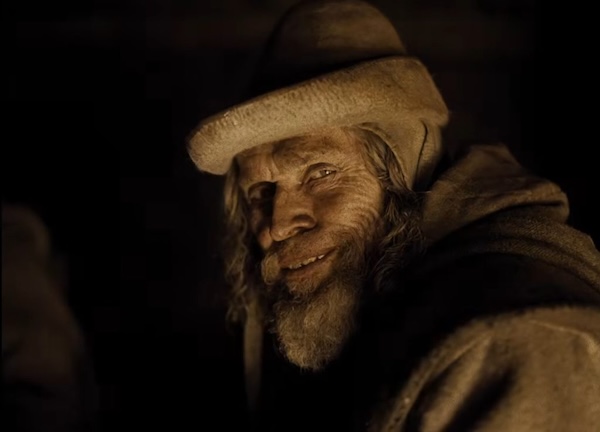
“Ye’re fond of me orthochromatic colour palette, ain’t ye?”
It seems like everyone’s talking about weird analogue film formats these days. Christopher Nolan just released the first feature-length film shot entirely on IMAX film cameras (The Odyssey), Alejandro G. Iñárritu used VistaVision for Digger, and Yorgos Lanthimos used Ektachrome stock for parts of Poor Things. Robert Eggers, ever the stickler for historical accuracy, shot Werwulf in 1.37:1 on 35mm film, as widescreen formats had not yet caught on in 13th-century England.
One of the fun things about analogue film is that different qualities of the image correspond to physical characteristics of the medium itself: if you want to double the size of a captured image, you have to double the size of your film.
Film Formats
The film widget above displays different film sizes and how they relate to each other. You can pick various sizes of film stock in the controls: these are the actual physical sizes of the film that goes into the camera. 35mm is the standard for cinema; 16mm was a popular amateur format from the 20s to the 50s, and Super 8 was used in the 60s and 70s for home movies and similar applications.
The Lighthouse (2019)
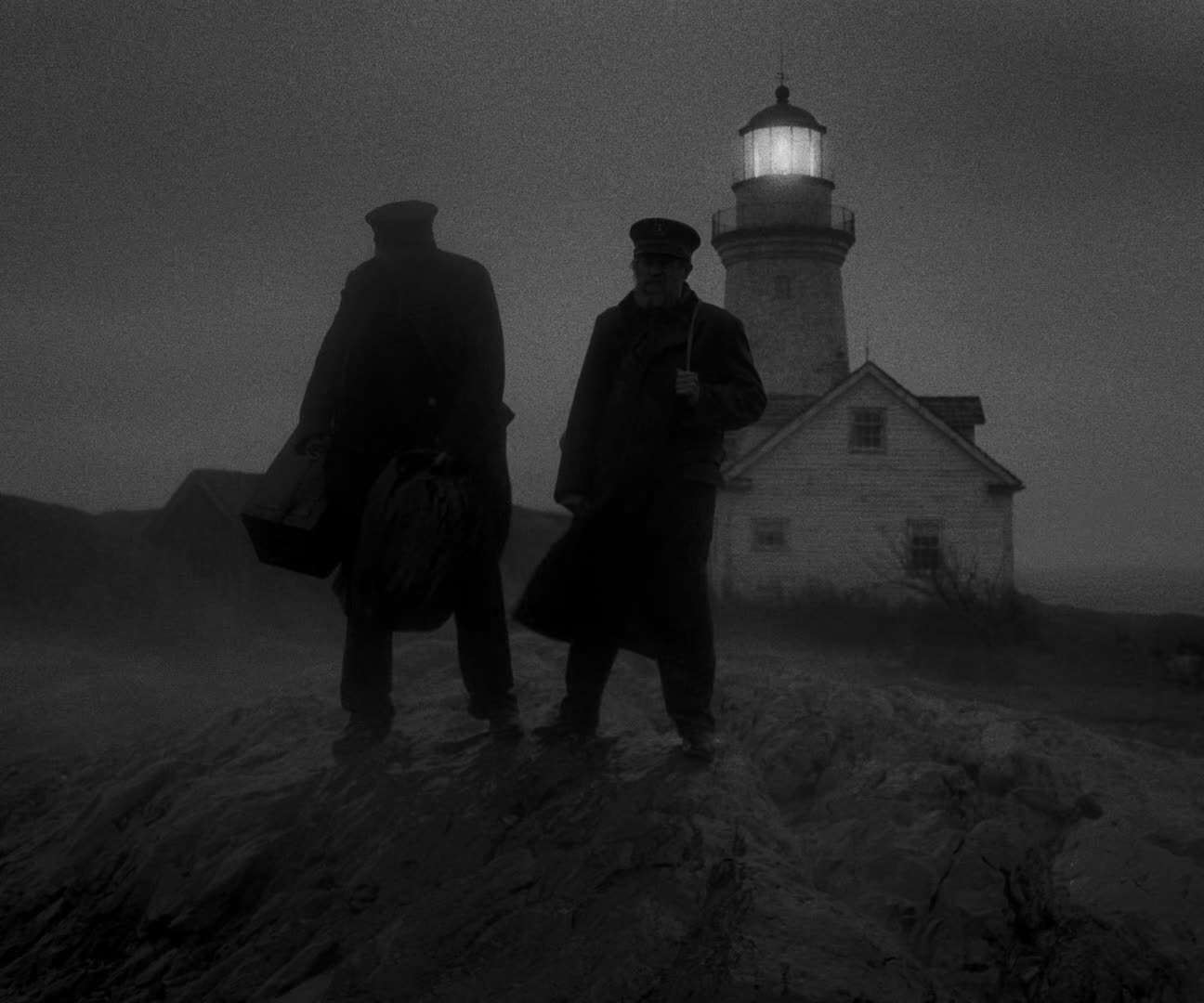
Different “cutouts” can give you different aspect ratios and sizes from the same film. For example, the Movietone format is cut from 35mm stock. It was briefly used during the transition from silent film to “talkies”: it took a standard silent-movie frame and cut off the right to use for the audio track. The resulting 1.19:1 aspect ratio was almost square; The Lighthouse used this format, and it gave the movie a very “vertical” look, which I think suited the subject matter.
After Movietone, the Academy standardised a format that roughly restored the old silent-era aspect ratio by shortening the frame vertically. Some modern films still use the Academy aspect ratio: First Reformed, for example; to my eye it made the movie feel small and focused.
Later formats were developed that took up more physical space, allowing for more information to be stored per frame. Super 35 doesn’t reserve space for the audio track on the camera negative, so it can squeeze a little more image onto the film. VistaVision rotates each frame, basically doubling the size of the image on the same film stock.
From the 50s onwards, Hollywood began to prefer wider aspect ratios for its blockbusters, partially as a way to distinguish theatrical cinema from 4:3 television. Classics like Lawrence of Arabia (2.2:1 Super Panavision 70) cemented the association between widescreen formats and cinematic spectacle. Studios employed “anamorphic” lenses to squeeze even more width onto film: Ben-Hur was shot on Ultra Panavision 70 (the same size film and cutout as Super Panavision 70), but used lenses on both camera and projector to squash and stretch the captured and displayed image to the extreme 2.76:1.
Ben-Hur (1959)
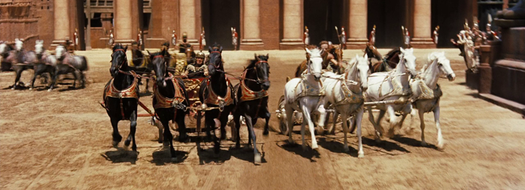
Over the past few years, this trend has started to go in the other direction: more and more blockbusters release theatrically with aspect ratios as tall as 1.43:1. The reason is simple: 1.43:1 is the IMAX aspect ratio, and IMAX is the prestige format for big-budget movies in 2026. IMAX is primarily a licensing program: to market a movie as “filmed for IMAX” it has to meet certain (high) standards set by the IMAX Corporation (e.g. it must be filmed using IMAX-certified cameras), and theatres need to comply with IMAX specifications to show a movie “in IMAX”. The marketing for the IMAX brand has been quite successful (not least because the licensing program does in fact ensure high standards), so in 2026 if a movie wants to market itself as a big-budget spectacle it will usually seek the IMAX seal of approval.
While making a digitally shot film adhere to IMAX standards and licensing can be difficult and expensive, shooting an IMAX movie on analogue film is downright exorbitant. The IMAX (film) format uses massive 65mm negatives, with each frame taking up 10 times the area of conventional 35mm films. The cameras that capture to this film are expensive, loud (although they managed to make them quieter for The Odyssey), and can only capture three minutes of footage at a time1.
These constraints forced directors to use IMAX sparingly: even on huge blockbusters, it might only be used for a few important scenes, where the larger frame would have the biggest impact. This has given rise to a gimmick that is (in my opinion) the best thing about IMAX movies: aspect ratio changes in the middle of the movie. I think the first time I noticed it was in The Hunger Games: Catching Fire. The image expands from a widescreen format to fill the whole frame just as the main character enters the arena for the titular games: the expanding frame in combination with the swirling camera and the lens flare creates a fantastic crescendo.
The Hunger Games: Catching Fire (2013)
Sinners (slight) Spoilers
Sinners used an aspect ratio change for a similar effect: when the vampires finally gain entry to the juke joint, the letterbox bars shrink and vanish. The transition is much quicker here, and a little less showy than the one in The Hunger Games, but I think it works well. As an aside, Sinners was an incredible movie: go see it!
Sinners (2025)
Via r/imax.
Special credit should go to the most recent Mission: Impossible film, which synced up the aspect ratio change with Tom Cruise physically turning a crank on camera. This was one of the most fun transitions I’ve seen.
M:I – The Final Reckoning (2025)
I should note that all of the clips so far are from releases of the movies on Blu-ray or streaming: as such, they don’t actually get as tall as a theatrical IMAX film. Instead, they go from some cinematic widescreen (maybe 2.39:1 or 2.76:1) to an HDTV 16:9 (or IMAX’s digital 1.90:1) ratio. It’s difficult to find examples of the actual theatrical IMAX footage online: one collector did have a few examples, including Dune: Part Two (shot digitally, but printed to IMAX film). While this clip doesn’t have an ostentatious transition, it is a good demonstration of how tall a real IMAX frame is.
Dune: Part Two (2024)
From a 15/70 IMAX film print, via 15perf70.
Finally, returning to The Odyssey, I have to say that I was a little disappointed that the whole film was shot on IMAX. I understand it’s a technical achievement, but it means we missed out on a dramatic transition. Maybe in the future someone will try to one-up Nolan by adding bits to the side of the IMAX cutout, rediscovering widescreen formats, and inventing a whole new variety of transition gimmicks.
Adam Savage has an excellent series on IMAX film and projection (he also has a very cool video on VistaVision)↩︎